New Build Gravel Driveway Finished Right in the Comox Valley
New builds come with a long checklist, and the driveway is one of those things that can easily get treated as an afterthought. It shouldn't be. A rough, unfinished access road might get you through the construction phase, but it's not what you want as your permanent finish. Getting the surface material and compaction right from the start saves a lot of headaches down the road.
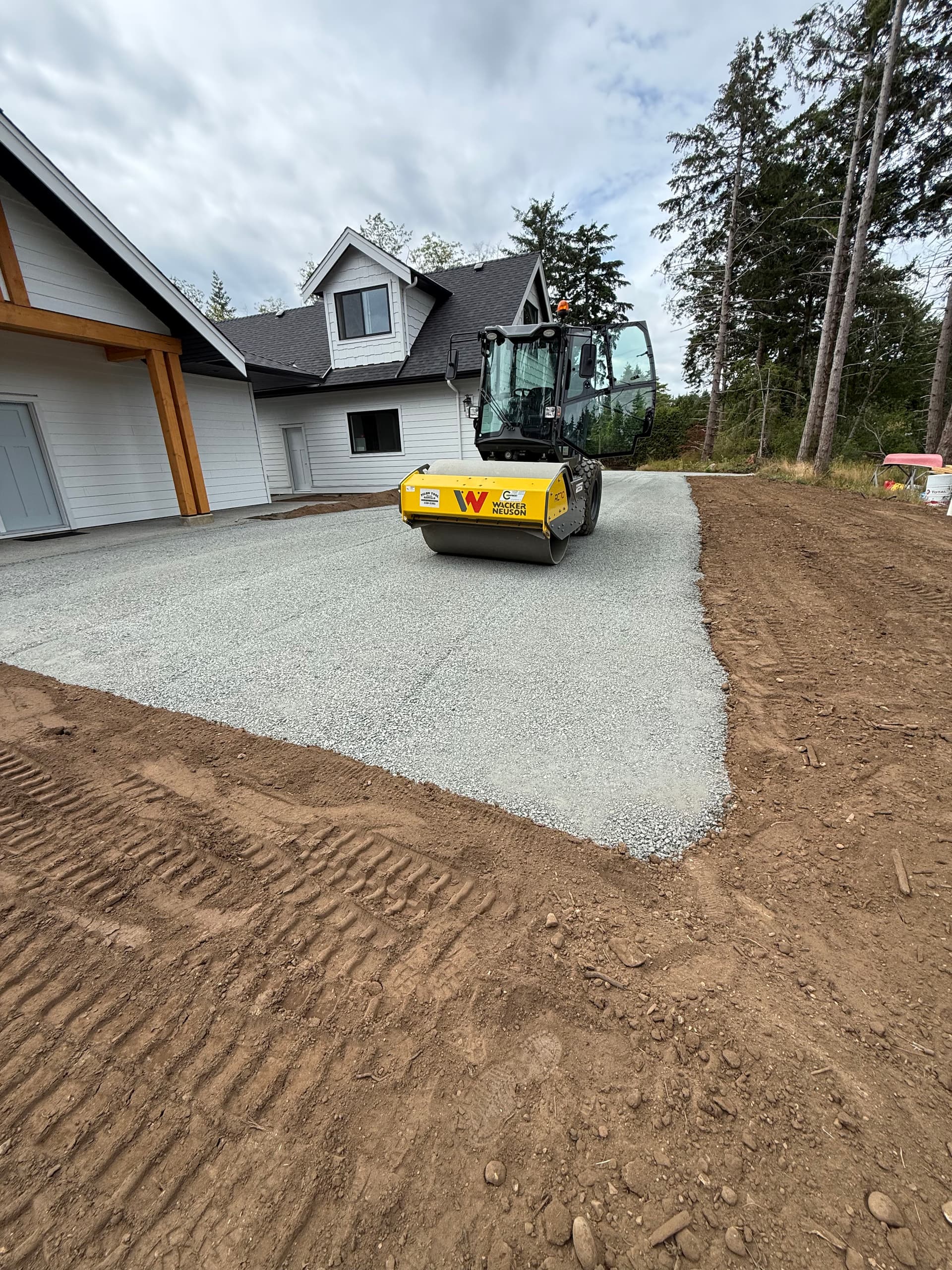
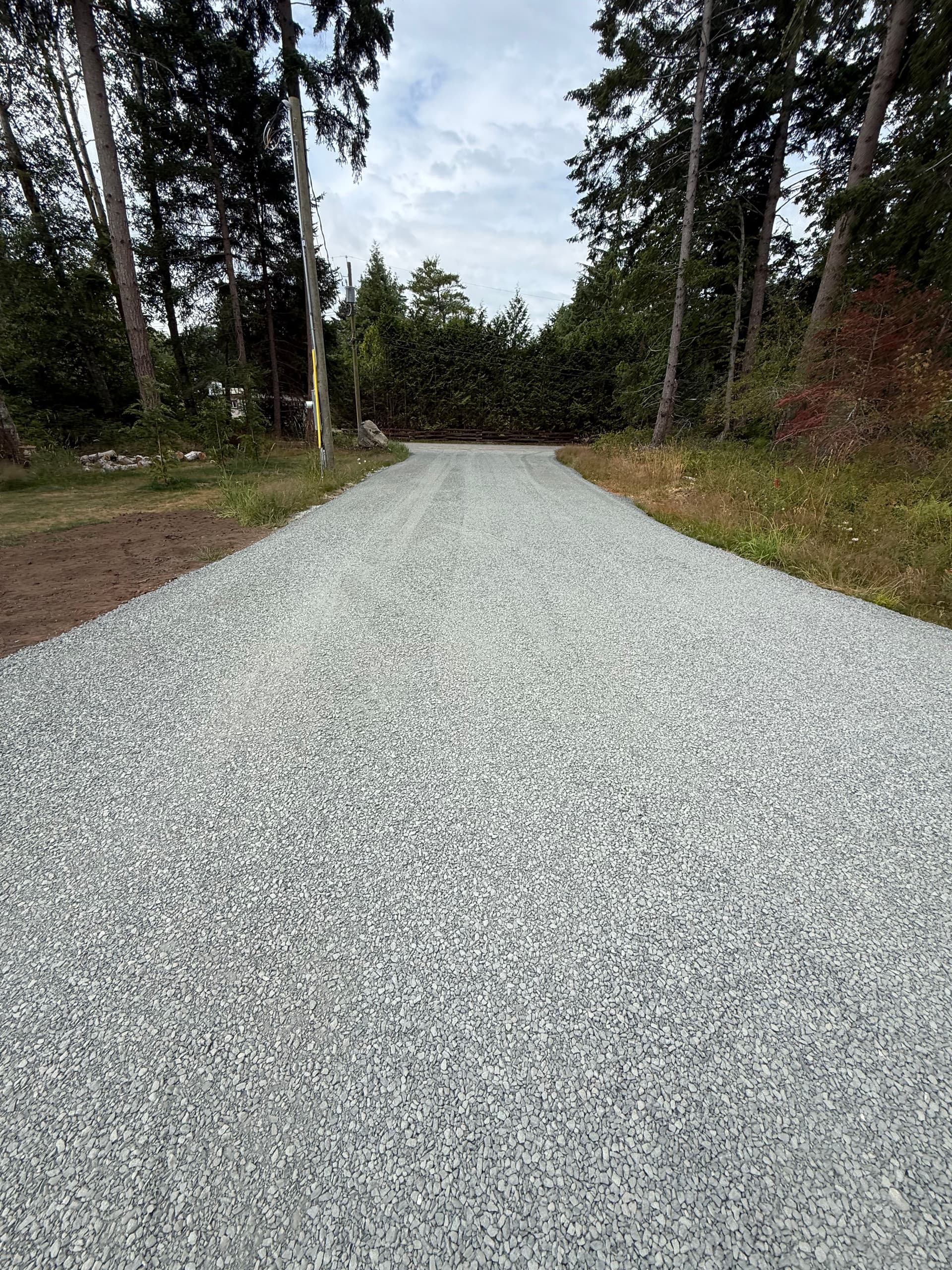
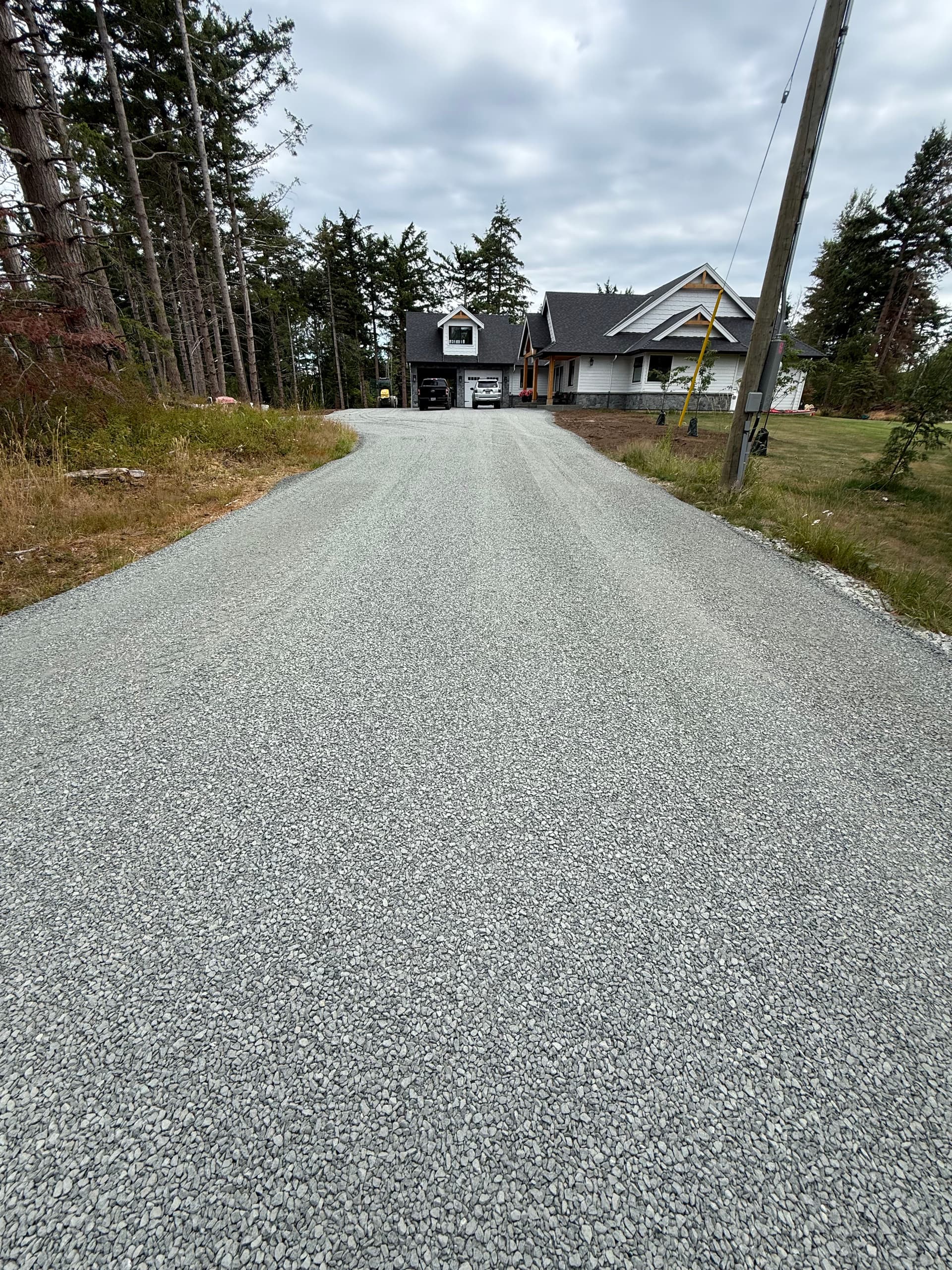
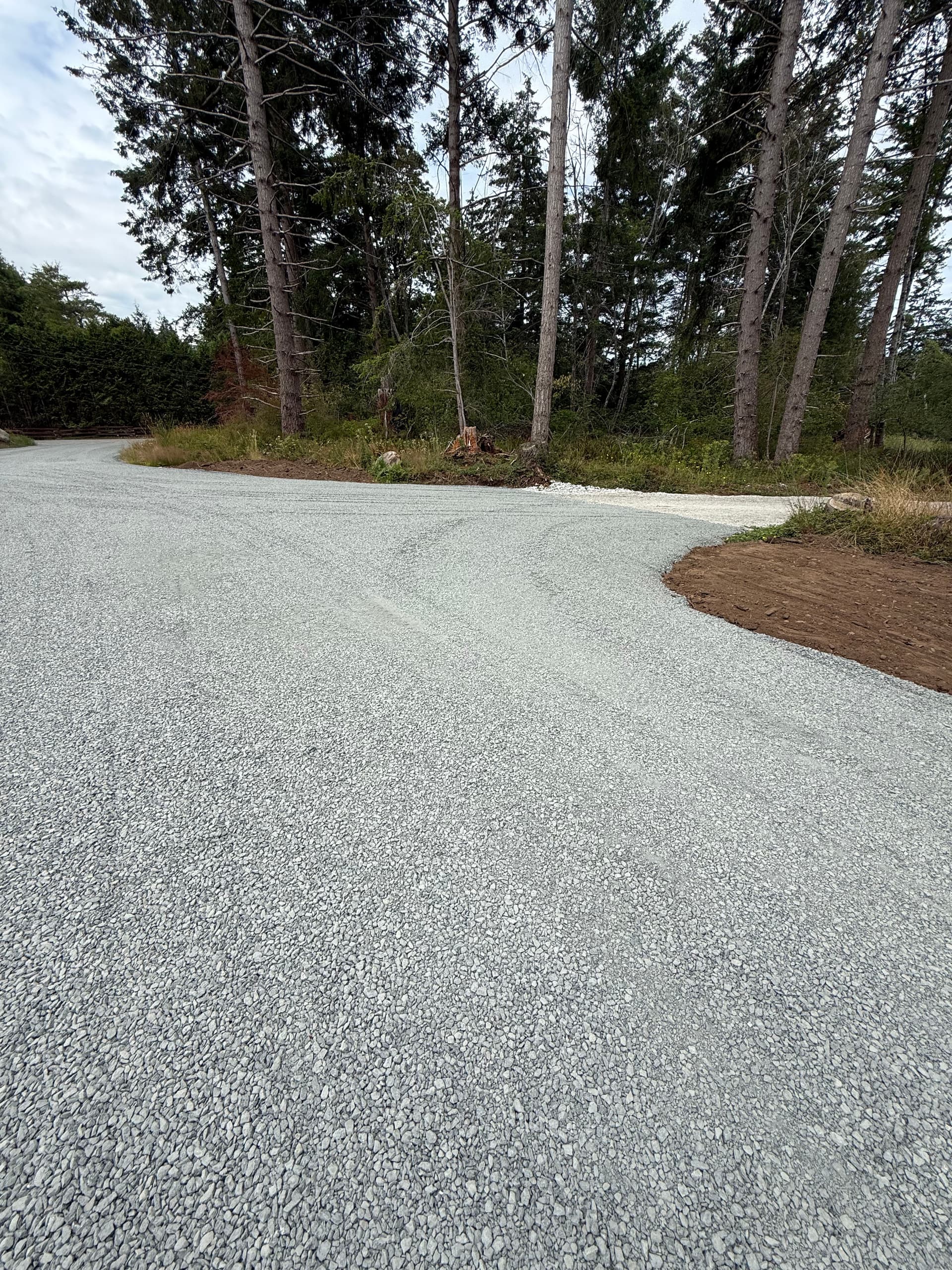
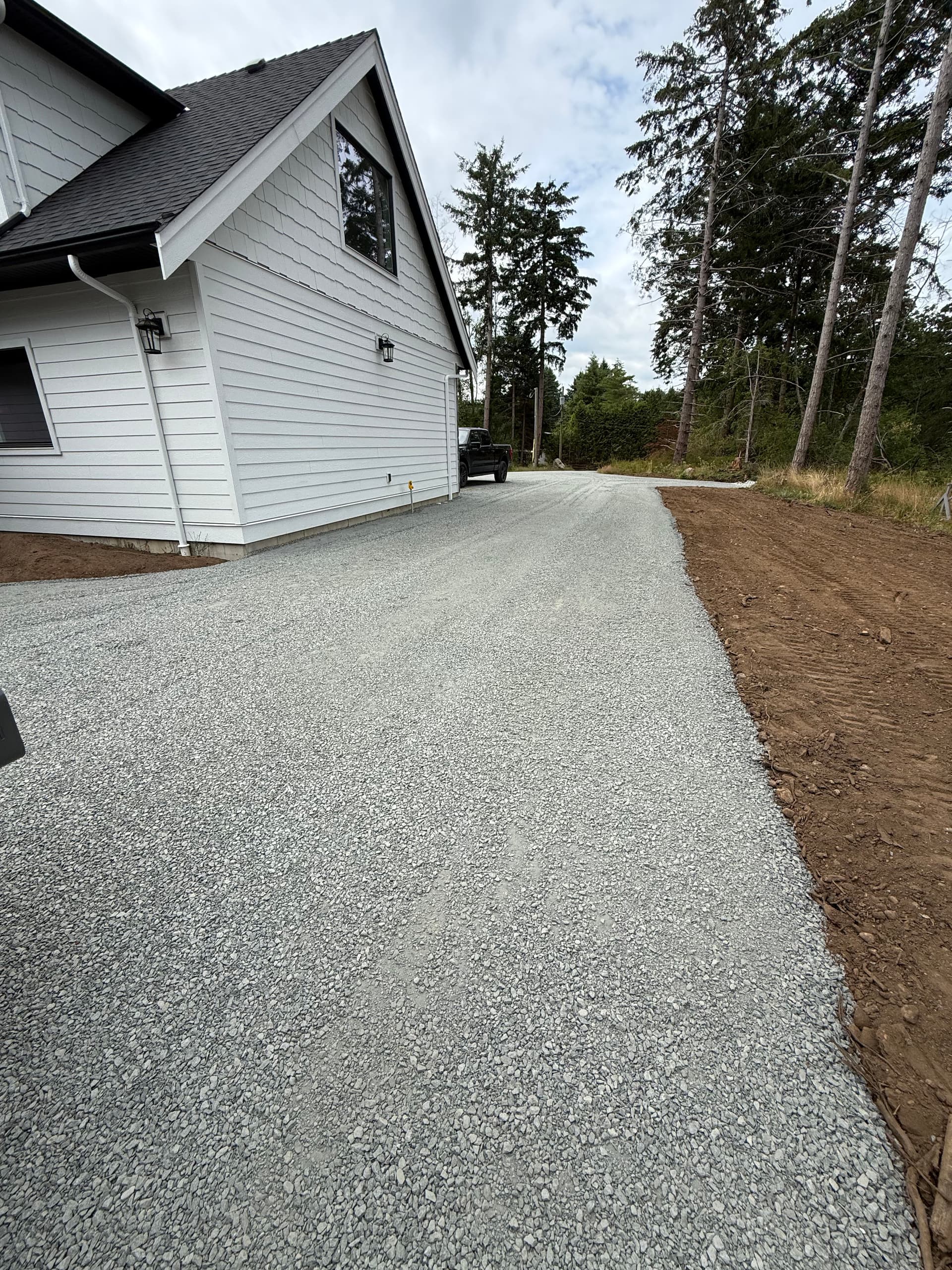
For this new build in the Comox Valley, we were working with a fractured rock base - solid footing, but not something you'd want to drive on daily without a proper finish layer. We capped it with 3/4" blue chip with fines, which is one of our go-to choices for driveways exactly like this one. The fines fill in the voids between the larger chips and give the roller something to bind together. The result is a tight, firm surface that holds up under everyday vehicle traffic without shifting or rutting.
The compaction step is where a lot of gravel driveways fall short. Dumping material and calling it done leaves you with a loose, uneven surface that migrates over time. We ran the Wacker Neuson drum roller over the full length to press that blue chip in tight and lock everything together. That kind of mechanical compaction is what separates a driveway that lasts from one that needs topping up every season.
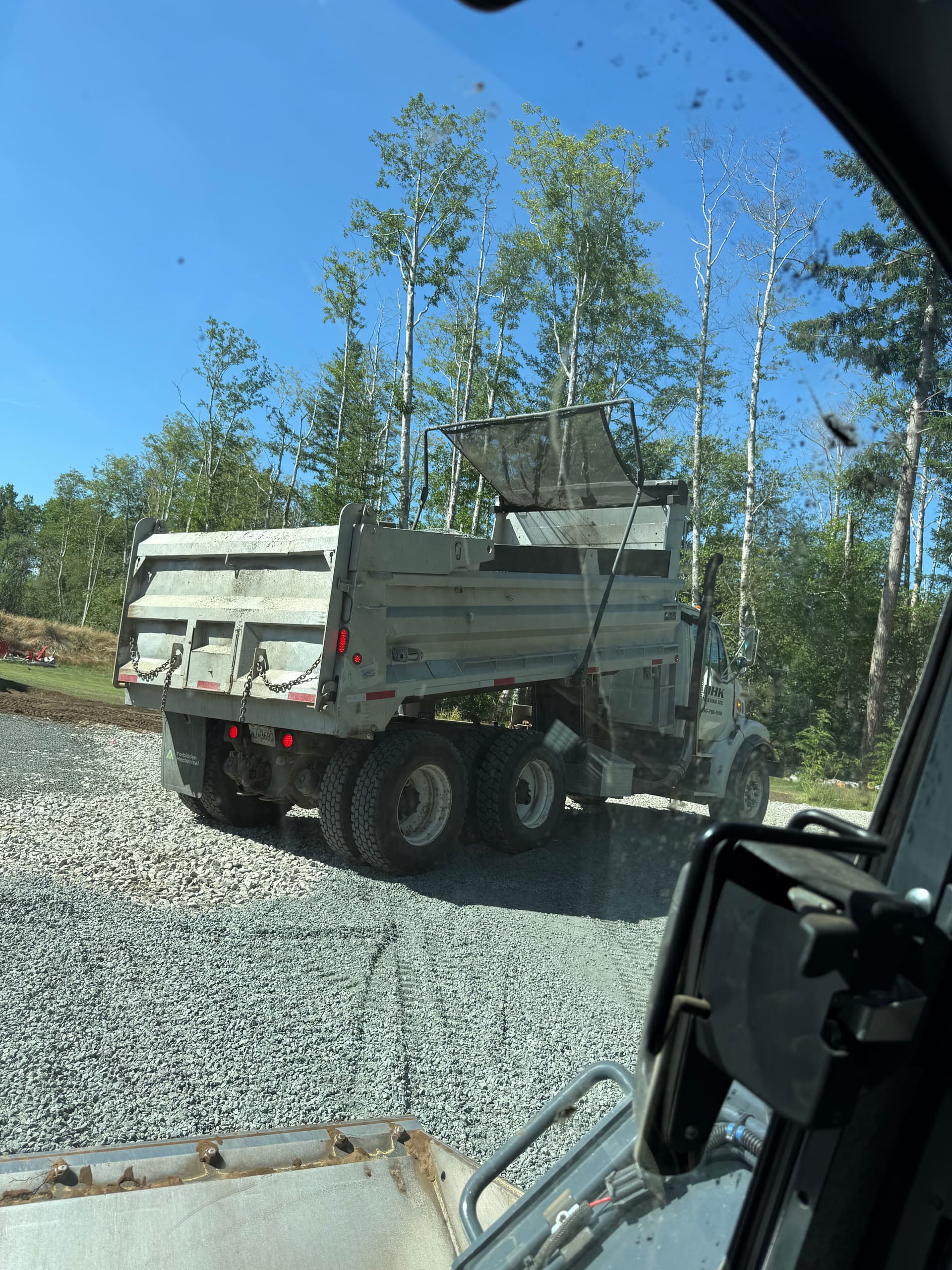
The finished driveway follows a gentle curve from the road right up to the home, wide enough for easy access and clean along the edges where it meets the surrounding grade. Big thanks to DHK Trucking Ltd. for handling the material delivery on this one - having a reliable trucking partner makes a real difference in keeping a job like this moving efficiently.
A gravel driveway done properly is one of the most practical and cost-effective surfaces you can put in on a rural or acreage property here on Vancouver Island. Low maintenance, drains well, and holds up through our wet winters when installed correctly. Material selection and compaction are everything - and that's exactly where we focus our attention on every job.